-
-
Alexandra Bart, Germany
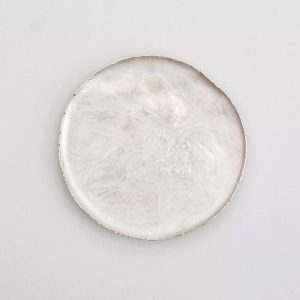
The moon
Free from vanity, I tell the truth.
I think every artist dreams of having their work displayed in a museum. It means that someone has recognised their value and is ready to share that value with the world. I am very grateful.
-
Andrea Vippermann, Germany
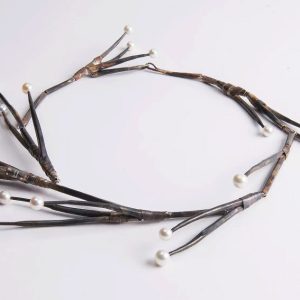
Snow berry
My jewellery is for people. When a piece of jewellery hugs the neck and its beauty is revealed by matching the wearer’s face, it is a success. Neck jewellery only shows its true meaning in relation to the proportions of the individual human being.
A museum exhibition can only be a way station. Here, the jewellery speaks of my love for nature and my quest as an artist to interpret nature in my own way.
-
Annamaria Leiste, Germany
Herzbehüter (Heart Shelter)
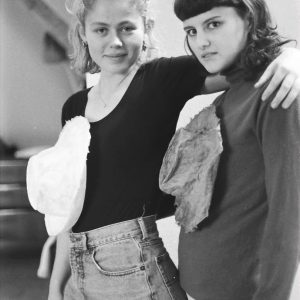
The installation “Guardians of the Heart” highlights the vulnerability of the heart and shows that it takes tenderness and del+D16icacy to create true heart connections. A series of pins made of mixed fibre papers – linen, tree bark, dandelion stems, mistletoe fibre. Each hat is attached to a thumb-sized oval pin made from a solid piece of silver. These pins create a clear defensive space around the wearer’s heart. Their size makes them a source of wonder and curiosity. Like a bandage on a wound, they evoke empathy. They remind us of a time long gone when a gentleman would take off his hat, hold it close to his heart and nod to the person standing in front of him.
-
Anneli Tammik, Estonia
~
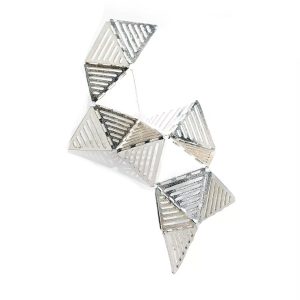
Today museum is place to put the pieces together to get the full picture… a lot like Tetris.. The design is based on the classic tetris principle, triangles have been used to achieve a smoother three-dimensional shape. The design of the created series is not “carved in stone” but is constantly evolving and changing. Improvisation with modules, arranged and folded differently, provides an endless opportunity to create different models and this way it is easy to personalize jewelry.
-
Artemis Valsamaki, Greece
Home always wins
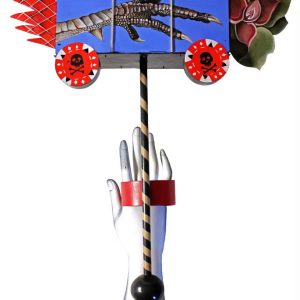
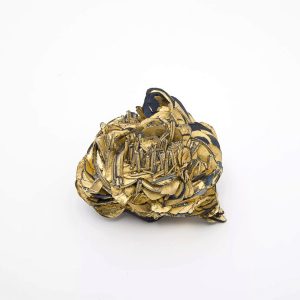
In the series “What are you made of” I am interested in the allegory of our physical body vs our human cravings and addictions whether they are acquired or hereditary.
A phycological dependence and addiction to hedonism motivate people to seek immediate sensations and momentary pleasures only to find out that they can never be fullfilled. But very often these impulsions end up to illusions.
This piece has the meaning of illusion, when you go for broke but you still believe you are a winner.
The house symbolizes our personality and what we are made of. -
-
-
Brigita Rodaitė, Lithuania
~
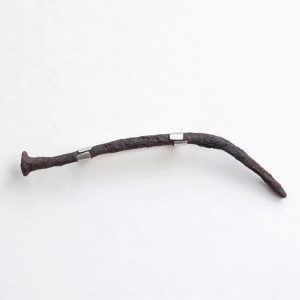
The legacy of a small twig. Something to make us ponder on what we inherit, what we leave behind, how we treat nature…, it will stay forever. To realise our temporality and our legacy to Earth and the World.
-
Camila Luihn, Norway
With my hands I make peace
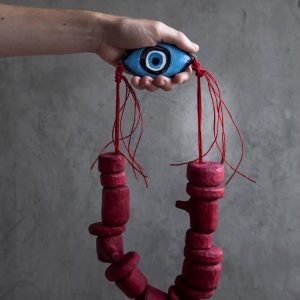
Reflecting the unsettling times we all are a part of, the hand crafted object makes a tangible connection to objects we normally see in museums. The hands when crafting creates a meditative thread between the maker and the material. The piece travels from the forest into my hands and then into the studio until it finds its resting place in the museum, charged with the power of making.
-
Carina Shoshtary, Germany
~
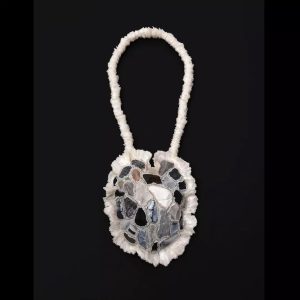
My family and I collected these pebbles during our vacation at the Baltic Sea. Most of them are flintstone, a mineral that is also called ‘steal of the Stone Age’ as our ancestors shaped weapons and tools from it, and you can still find arrowheads, scrapers, flakes, or blades there. It is hard to tell apart naturally broken stone from an ancient tool, but I love the idea that these stones could have been shaped by humans a long time ago.
-
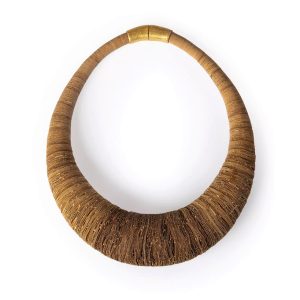
Carmen Hauser, Germany
MY most interior and MUSEUM
MY (A) place of tranquility, where the inner and outer voices becomes silent, which try to distract and influence me. Leaving future and the past behind.
Living right here and now and perceiving the moment. -
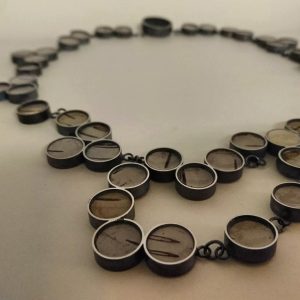
Catarina Hallzon, Sweden
A tribute
A tribute
Birch and its bark is a fantastic material. Our ancestors used it to build roofs, insulate houses, braiding shoes, baskets and vessels. There might not be a practical use for this material nowadays but, we can let the material live on by helping it to find new ways of expressions. This is a tribute to a material that for so long meant so much for so many. -
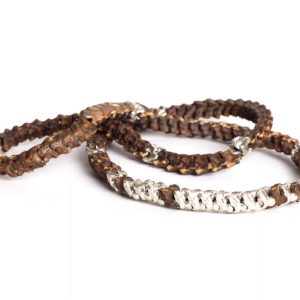
Chloe Valorso, UK
Snake medicine
The Snake is a powerful symbol of transmutation.
The vertebrae are morphing from natural to handmade, organic to technique, imagined to experienced; Reminding us of our continuous metamorphosis as we evolve and adapt to the worlds around us. Embedded with magic, Chloe’s amulets are part of her own cabinet of curiosity, her supernatural history museum – as physical fragments of a metaphysical dimension. -
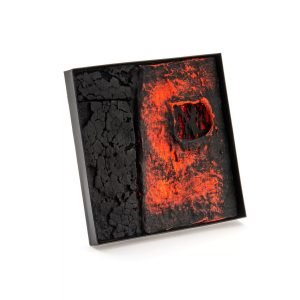
Corrado de Meo, Italy
Corrado De Meo; Night Landscape II
In my works, the silver structure and its content tell of the inexorable passage of time that governs human daily life. The rational geometry of the structure represents the attempt of the Reason to understand the unpredictability of existence.
-
Daria Svirel, Latvia
I need a second skin
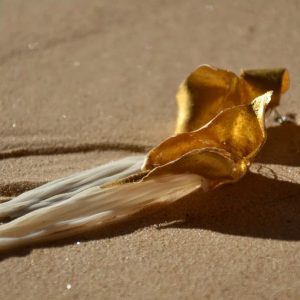
The gold exists since the planet was born. Plastics exists since human is.
Gold is unique most precious material, material of kings, of human. Plastics. We use it in building houses and cars, in making clothes and household chemicals, in cosmetics, it is everywhere. Too much of rubbish after. We can’t live without, but have to think about how much what what we do. We have to be responsible as we are human. -
-
Eglė Čėjauskaitė-Gintalė, Lithuania
~
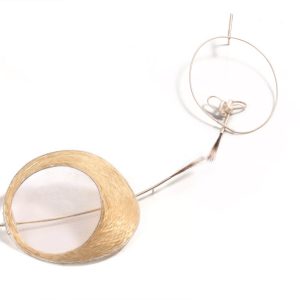
A few years ago, I began collecting flashes of a special feeling. I note them down: where it happened, at what time, what I was doing at that moment, what colours were surrounding me, whether there was any smell in the air, and so on. What are those flashes of feeling? They are bursts of indescribable pleasure and goodness, without any thoughts, that catch me just like that, for no particular reason, as a boom out of nowhere. And just as suddenly as they come, they vanish.
What I am trying to capture in my brooches is like the fluttering of the butterfly of the moment.
-
Eglė Širvytė, Lithuania
~
Have you ever held the light in your palm?
Seen a sphinx drinking daylily’s nectar?
Or stopped to watch flying gaurs as they carry the summer away?
Have you dived into the river naked?
This summer is about the senses. There is an urge to touch, smell, hear. As if something had awakened something primordial in me that had been sleeping. A strong desire to know what I am surrounded by, what I stand on, what I smell. The squawking of cranes, the cooing of wood pigeons, the swishing of sweet flags, the bleating of roe deers, the timidity of herons, the fragrance of meadows, the glowing of fireflies, the intricacy of plants…
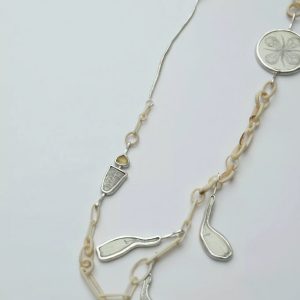
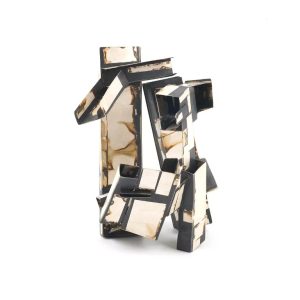
All this slows me down considerably – insights take time. My inner fullness and growing curiosity bring me to the realisation that I don’t need that much – just to be and feel.To me, the word ‘museum’ means history. And history means experience. Mammoth bone necklace reminiscent of prehistoric times work in the context of a traditional museum, but the concept is also relevant for a contemporary person.
The necklace is the preservation of my explorations that will remind me of what mattered to me most in the summer of 2020. -
-
Estela Saez, Spain
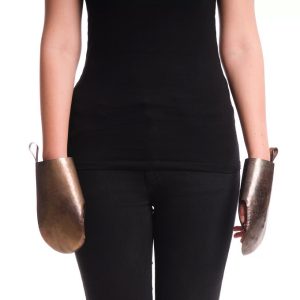
Losing roots
Although she uses expensive raw material, her work does not renounce to the postulates from the “povera” artist. That is at least fascinating. Her atomized filigrees, rusted or laminated do not renounce from the truly value of that nobility, and from their portable jewels function. I wait and wish that Estela never forgets that her work is an small tribute to a place and a land, her pieces can be worn in a body, her objects can be sustained with hands, but in the end, and that is her greatness, her jewels are universal.
Jordi Mitja
-
Felieke van der Leest, Norway
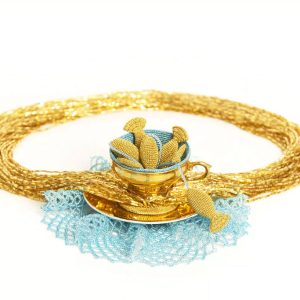
Goldfish tea cup on beaded water
This work is perfect to be on display in a museum since it is too delicate to wear as a necklace. Some of the gold colored beads have sharp edges and can cut the textile thread on which the beads are strung. I found this out after I finished the work…
-
Flora Vagi, Hungary
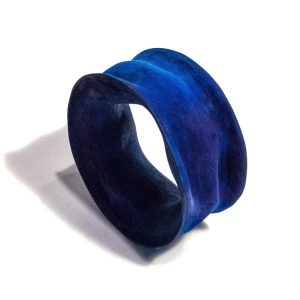
Blue velvet
My works are like the trees, that are rooted deep beneath the ground, but reaching up towards a limitless sky, searching for answers sometimes never asked. Through my pieces, I try to attract people, to doubt, to question what they see, to desire touch. Museums have a similar effect on people. One enters and already feels to be in a different, isolated world, separate from the outside, distinct from the ordinary… they enter a quest, or they travel in time, or go on a journey in an artist’s mind. In every case the museum offers an experience where one feels and thinks, takes his/her own pace to experience things and the surrounding space. Contemporary jewellery offers a such an experience, but from another perspective, so this way the museum can hold a double meaning giving space to this wearable form of art.
-
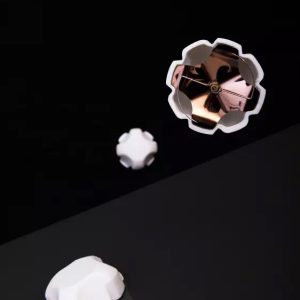
Florian Milker, Germany
Valve
As technology continues to advance, societal and individual values must be rethought. In extreme situations, we are confronted with fundamental needs and values: but to what extent are they still part of everyday consciousness? Jewellery, for me, is also always a plastic reflection of the wearer’s values and needs.
-

Fumiko Goto, Switzerland
~
How is spirituality presented?
As my response to the theme MUSEUM I chose religious architecture.Ise, an ancient shrine in Japan gradually lost its aristocratic benefactors, has gained new patrons of commonality in the 19th century, this owning to campaigns by Priests to promote “all-inclusive pilgrimage”, inclusive of lustful entertainments for life-time purification of soul. The juxtaposition around this sanctuary interested me to create a diptych-brooch, one reflecting the floor plan, the other a motif of Hyôtan – calabash, beloved in traditional Japanese design since old times.
-

Gesine Hackenberg, Netherlands
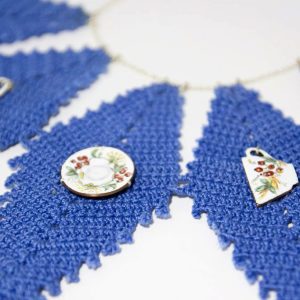
Blue white
Sometimes, an object from the past can be highlighted in the perspective of jewellery.
In the series Kitchen Necklaces, I use preferable antique Dutch faience plates to cut out round ceramic discs and thread them firmly to necklaces suggesting a traditional string of pearls.
These works consist of two parts: the necklace and the perforated plate. The faience plates carry stories of everyday life and meals, but also of shipping and international trade. Faience manufacturing in the Netherlands was strongly influenced by the Chinese porcelain that was imported during the seventeenth and eighteenth centuries, and the stylistic influences from history are notable even in many of the more recently produced plates I use. -
Gintarė Janulaitytė, Lithuania
~
The unchanging house of my grandparents. As far as I can remember, it always looked the same. Like a wonderful place of childhood, preserved in time and space. My grandparents, too, seem unchanging to me. It is nice that the house has kept its uniqueness, that everything here is real, old, sentimental, familiar and cosy. When you come here, you feel like in a small museum, where each exhibit has its own story. In my jewellery collection, I aim to immortalise those patterns, items and feelings.
-
Greta Žeronaitė, Lithuania
~
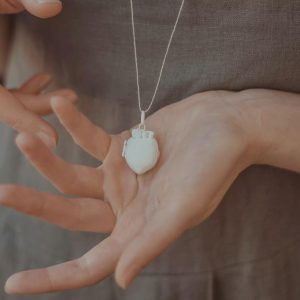
As far back as in the Victorian era, locket pendants were a distinct way to keep an item, usually one that had a significant personal meaning, close to you. I love’ is the message the locket sends. Or maybe more accurately, ‘I loved’. Even today, we understand that lockets are a way to show fidelity to someone who is no longer by our side, regardless whether the loss occurred through death or simply through the general isolation of modern life. The simplest word. To remember. To keep an overheard word or a conversation that touch us, make us and protect us.
-
Hanna Liljenberg, Sweden
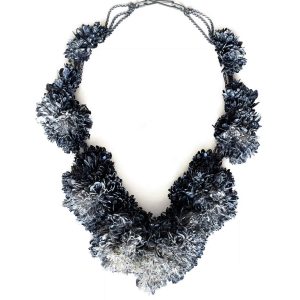
Seaside
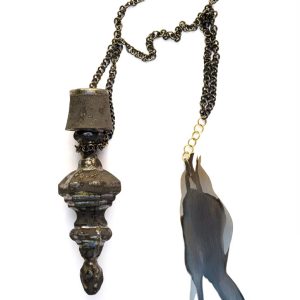
The Swedish west coast where I grew up is characterized by barren rock landscapes. Heavy waves and strong wind creates a harsh environment but lichens and barnacles cover the stone.
My work is influenced by these aesthetics. I hope that my grandchildren will have the chance to experience the salt water and the rough and delicate vegetation, that it will not only be preserved as a memory in a museum. -
-
Helga Mogensen, Sweden
~
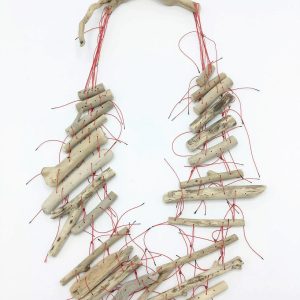
The wood used for the work has been in the ocean for an uncertain amount of time, it has been a tree, a forest or a friend in an unknown location. The history of the tree is unknown and magical and for it to go between countries and be used for jewellery, for a new purpose is in itself a museum worthy concept to grasp and also totally worthy for nature to be represented in a beautiful location.
-
Hrafnhildur Halldorsdottir, Iceland
Amalgam
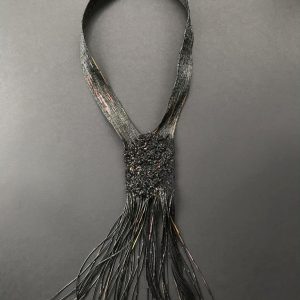
Amalgam means mixture and this speaks to how on a practical and conceptual level this piece consists of many strands working together to make a whole. This feels both like a personal statement of multiplicity and identity, but also as a statement of existence within a wider population where community achieves much more than the individual. This amulet brings to the wearer and the viewer, a sense of history of time and being.
-
Jana Machatova, Slovakia
~
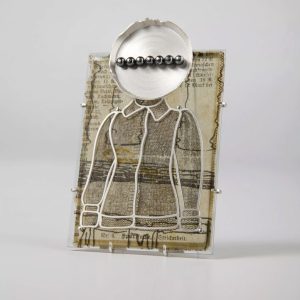
I am flicking through a tattered newspaper from 1909 and thinking of the woman who kept the supplement with instructions for needlework in a black folder in an old cabinet in the attic. She redrew the monogram designs and embroidery patterns in ink on translucent paper and included them in the scrapbook collection. I can imagine her sitting by the window, by our small window, embroidering her daughter’s trousseau or knitting baby slippers. I am thinking of the unknown woman who embroidered beautiful pictures, and yet she had no idea what horrors of the twentieth century awaited her. I am thinking of her and wishing her that the moment of peace and concentrated work on something nice would last as long as possible. At the same time I feel an unusual affinity with her. I pour epoxy resin on the newspaper, trying to preserve the memory. It becomes translucent, but the contours remain, and the patterns overlap…
-
Janna Syvanoja, Finland
~
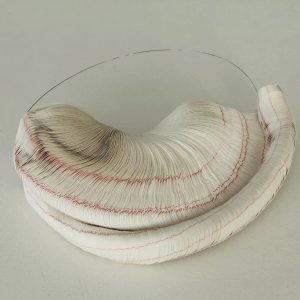
My MUSEUM-piece is made of paper for writing letters, white paper with red stripes. Who writes letters anymore, who uses paper and pen? Is it too time demanding, too personal, too laborious?
Handwritten letter is a bit like handmade jewellery: parcel filled with time and human touch. Skill to make paper, skill to write and work with hands, longing for communication – they are all worth preserving. -
Jelizaveta Suska, Sweden
Frozen moment 3
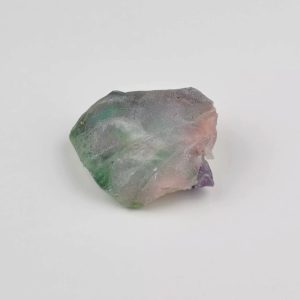
Jelizaveta Suska in her jewellery aims to create her own new world. She crafts her works so that if she was to become tiny and drop onto her jewellery, she would see a marvelous landscape. ‘Frozen Moment’ pieces are a lot about feelings of nostalgia, of a moment in time. In this work, artist was looking for materialization of these abstract matters.
-
Jenni Sokura, Finland
Packed lunch
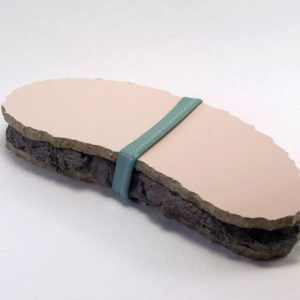
A place to be, a place to visit – I see my museum as a building with several layers of time and knowledge. Information upon information, museum offers all the essential nutrients for being aware of our time then, now and tomorrow. My museum is reliable, hard and stands on its own while I can sit down and enjoy the packed lunch.
-
Jil Koehn, Germany
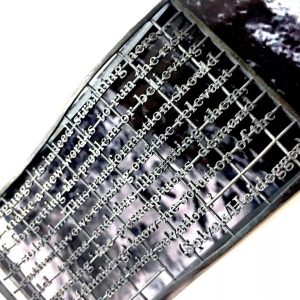
Aqua + Lilium + Coral
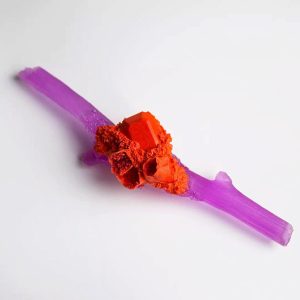
My jewelry is a homage to nature and a call to dream. As part of my design, I address the importance of fantasy in our lives on the basis of dealing with imaginary places and questioning realities.
I see a museum as the ideal place to stimulate fantasy and to create mental worlds. The combination of the museum calm, the spatial distance to the objects and the aesthetic experience creates something magical. -
-

Jonathan Hens, Belgium
Beige
Jonathan Hens’ work speaks of recent developments in today’s world. His designs are the result of an intense search for an alternative identity. The necklace mirrors (or reflects) ‘the now’.
His atypical aesthetic has no truck with traditional techniques. He creates a visual game between austere forms and a rough edge finish. His work raises many questions, such as what beauty means today.
Jonathan’s work gives us greater insight into the diversity of our world. -
Judy McCaig, UK
Crossing Rivers
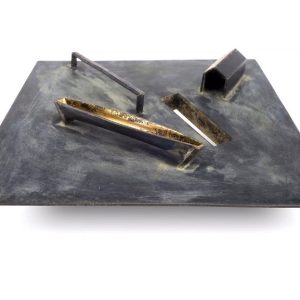
Intrigued, from an early age, by ancient cultures, beliefs in the afterlife and travels beyond, meant that investigating in museums became essential to my research. Symbolic artefacts were placed in the tombs to help onward journeys. Boats were to enable the crossing of rivers.
White, gold and yellow, represents the sun and the moon.
Egyptian, Viking, Russian and Indonesian ships began to emerge in my latest pieces. -
Jurgita Erminaitė-Šimkuvienė, Lithuania
~
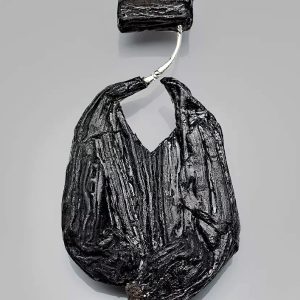
The main museum of my works is the space underneath my bed. That is where my pieces end up most often after exhibitions. When I learnt the theme, “Museum”, I got under my bed once again – not out of fear or to stick there yet another of my exhibits, but hoping that I could find my inspiration there just like I’d done in the past, as well as in the children’s treasure chests. And I did find it – this time, a dried banana. I pulled it out as the most precious find and hung it in the most visible place above the kitchen table to make it even more beautiful. I don’t know if that did beautify it – the most beautiful things probably happen away from the eyes, but that was enough for me to “sew” clothes for an invisible person. Although I did I have an idea who they could fit and who could finally raise their hat…
-
Kadri Mälk, Estonia
Bindweed
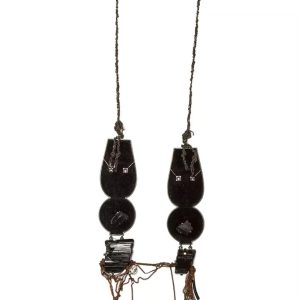
No one knows why a certain intention arrives at a certain hour and not a minute earlier. The intention probably needs to undergo a certain clarification in order to take shape in our mind’s eye, and a certain strength to break through the walls we ourselves have erected for ourselves. From a certain point on there is no way back. That point must be reached.
Atonement is the most important – it comes to me when I am worthy of it.
Words and commands are useless here; prayer, on the other hand, perhaps…
Impatience is the deadliest sin.
Inspiration, in spirare, is the dilation of blood vessels in the brain; it is only blood.
When it has happened, it has happened, it unmasks identity just as surely as a fingerprint, a chromosome in my blood. Blood never sleeps. -
Karin Herwegh, Netherlands
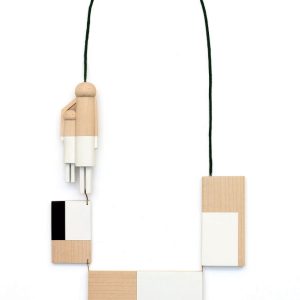
Theme of two cities
In my practice, the idea of gathering, ordening and ‘preserving’ is always present. The elements I look for (and recreate) are based on my surroundings, memories, nature,(archeological) artifacts, and after stylizing them I bring them together to suggest a narrative.
Like a museum display, they show remains of a life that once was (or never was), fragments of what still is, and at the same time the necklaces are an invitation to discover new ways of interaction between different worlds, man and nature. -
Karin Johansson, Sweden
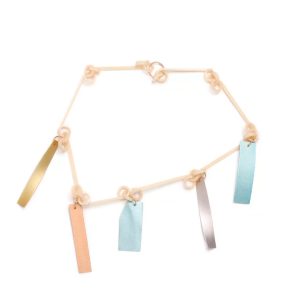
Observations from a distance
Observations from a Distance is a selection of works taking inspiration from the surroundings and memories of places and imaginary pictures. The names of pieces in the group hints at the landscapes and weather that inspired their making. At the same time titles of the pieces also to speak a more universal language, in order to invite to a broader understanding and varying interpretations. Observations from a Distance refers to working from this place of memory as well as the distant horizon lines of a place and landscape where time is often spent. Even in the studio, keeping a little distance from the work, to observe it from a distance, and try and allow the work to evolve and breathe for itself, in an attempt to observe rather than analyze, which is another type of distance. In the creative process of Karin Johansson gravity and balance are always central aspects in the work.
-
Karina Kazlauskaitė, Lithuania
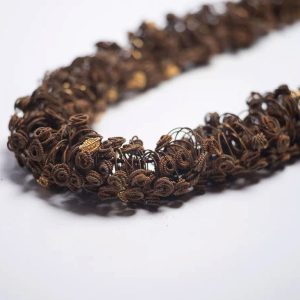
Live roses
I associate visiting a museum with a time machine. This necklace is a piece about the flow of time and death. 599 rusty rings and 32 gilded ones, strung on a pig’s intestine.
-
Karina Lazauskaitė, Lithuania
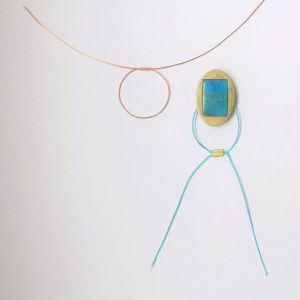
Self portrait and the frame. Two rings
Thinking about museum first image that arise in mind is a painting.
So I made self portrait and a frame, for the biennial theme “Museum”. -
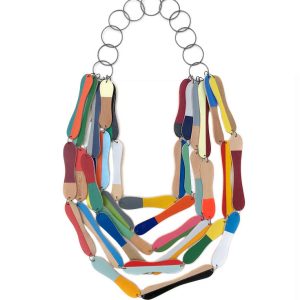
Karola Torkos, Germany
Ice cream cascade side
Karola Torkos’ methodology moves between finding conceptual form in jewellery and including the ordinary with playfulness as the major inspiration for her ideas. Her main focus is on sequences, abstract shapes, and colourfulness in and of itself. Karola Torkos creates pieces that reflect her ongoing fascination with changeable jewellery and the concept of the body having ‚perceptive capabilities’. Her neckpieces are reversible with no back or front; so one good side is always turned towards the wearer’s body. The wearer decides what to put on show, placing the last part of the design process in their hands. Another main aspect of Torkos’ ‚playground’ is the unlimited experimentation with day-today items and materials. Those articles offer a predefined, typed or even standardised reality that is challenged and commented on, releasing seemingly endless possibilities of design.
-
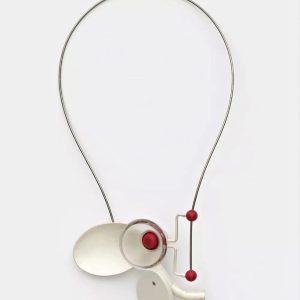
Katja Prins, Germany
Inter-act
Interaction is a key concept in the work of Katja Prins. Interaction between whoever is wearing jewellery, and the other – between the human body and modern technology – between seething nature and cool intellect. Prins’ collection Inter-Act reflects on all this but also derrived from over-looking all her previous collections and making connections and interactions between them. Hence Prins chose these works as a representation for her ‘personal museum’ since they reflect her fascinations as well as her previous works.
-
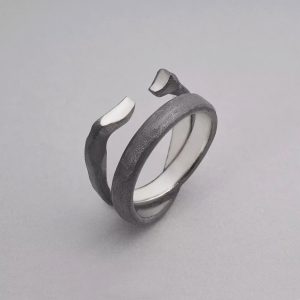
Kotryna Vaitekūnaitė, Lithuania
Linguus
Rings are like fossils exhibited in a museum, reminiscent of traces of organisms on earth.
The core feature of my work is exploring organic forms and interpreting bone structures in jewellery while conveying their character and adapting them to the human body. -
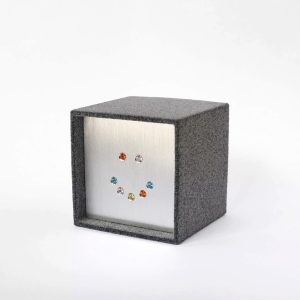
Laura Forte, Italy
Cube emoticon
You know how to listen your feelings? Are you sad or are you happy? What is an emotion? Is it perhaps a dress that covers our body? Or something deeper? In this time-no time, our body acquires a new understanding of its status. Listen to yourself.
-
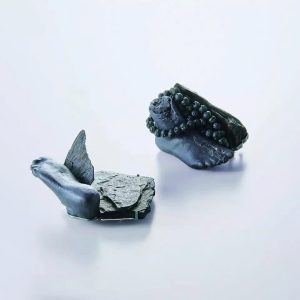
Lauryna Kiškytė, Lithuania
~
Aesthetic and puzzling, each of my works conveys a message, making jewellery more than an attribute of beauty. I seek to engage the viewer in a virtual dialogue about myths, archetypes, memories, discover the ancient and modern symbols, inner and outer world of the bystander.
The very origin of jewellery is based on ancient rituals, and for me, creation of every piece of art is an intimate ritual providing the viewer with the liberty to find his or her own perception of every artwork. -
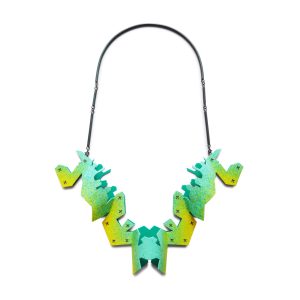
Linnea Eriksson, Sweden
Grow
For several years I’ve been working with different ways of preserving my memories, and my family’s origin story into jewellery. It often starts with a photo, a view of my home, or a precious moment from the past. I reflect and rearrange, and by using my hands I transfer my observations into metal – a lasting piece of art, where my memories are not to be forgotten.
-
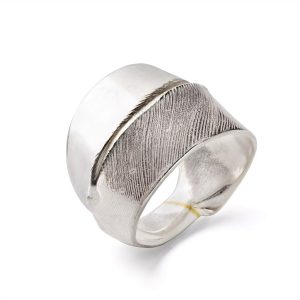
Louise Billgren, Denmark
Relate
When I think about Museum as a theme, 3 words come to my mind: relate, embrace and connect.
All universal and relevant concepts for a future Museum. -
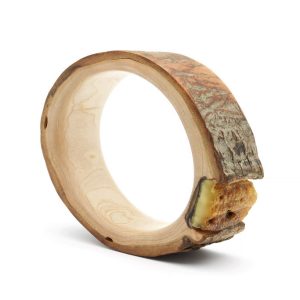
Mareen Alburg Duncker, Germany
Mad (bracelet)
Some bracelets of this new group are made of self-found wood from my homeland. To me every bracelet is like a little oasis. Sometimes saved in a box or in a show case of a Museum and sometimes brought to live by carrying it in its intended function.
-
Margit Jäschke, Germany
~
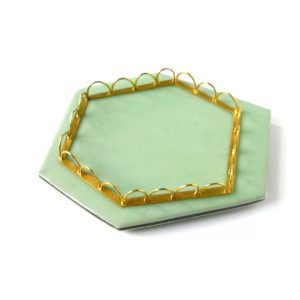
The artist Margit Jäschke (b. Halle / Saale, 1962; lives and works in Halle) describes herself as a wanderer between the worlds of different arts. Defying the conventional bounds of installation, painting, sculpture, and jewelry design, she has created an entirely distinctive oeuvre with fascinating forms, deliberately blurring the distinction between wearable ornament and autonomous art. Details become meaningful, evoking a variety of associations in the beholder. The jewelry object reveals vistas of fantastic worlds and conjures up what had been forgotten. It is in the eye of the beholder to discover this.
-
Mari Ishikawa, Japan / Germany
Rebirth
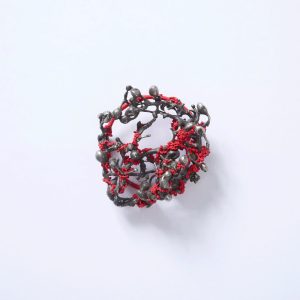
Nothing that has appeared in this world can escape its ultimate destiny: Disappear. But we have also the power of regeneration. Plants quietly show me that fact: Rebirth.
Where does a „Parallel World“ exist? Can one discover this world through time travel? Is it perhaps possible to see this world in a dream? Or in MUSEUM? The world we see is only a part of the entire reality which is composed of many worlds existing simultaneously, side by side. We can find “Parallel Worlds” whenever we open our eyes. They are always with us. -
Maria Valdma, Estonia
Off
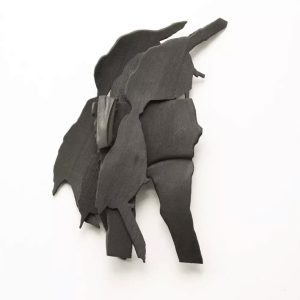
According to the conceptual idea (“Museum”) of this year’s International Biennial of Contemporary Metal Art METALLOphone, I have chosen to submit pieces from my jewellery collection “OFF” (2016). The pieces are made of burned wood and gold. With fire you seem to document a certain moment – the act of burning reminds of something characteristic to musealization. Preservation of both casual and intentional encounters, paused thoughts and emotions have been conservated in pieces of jewellery. This is an archive that has started from an act of giving up, a day that passed by became a memory:
The door was locked and that was it. The key was left to its regular place, the hallway, next to the fridge.
One could have thrown them into a container nearby.
I forgot about the asparagus and the fern. For a moment I even felt sorry.
I sneaked back to the yard in the dark. In a hurry I tore off all peony blossoms. All of them. -
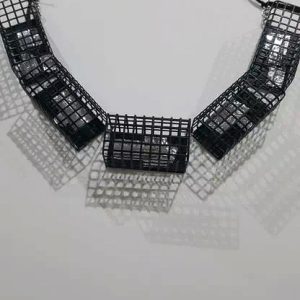
-
-
Nanna Obel, Denmark
~
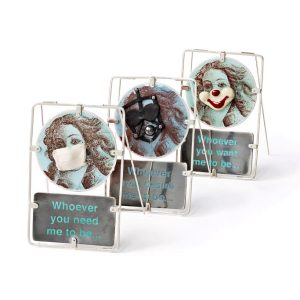
This year we have all seen and learned the meaning of the pictogramme “Face masks must be worn”. It made me reflect on how many different masks women are wearing in various cultures both now and in the past. Which signals do these masks send? Are women being oppressed or are they really the ones in charge in our society? What do these masks mean to you?
-
Neringa Poškutė-Jukumienė, Lithuania
Живе…
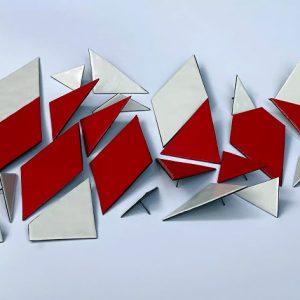
I present my enamel artwork Žive … from the series “Borders”, which speaks to today’s realities and trends: the warning yellow and black, white and red stripes are now everywhere – in public transport, in shops, in offices, etc. However, however much we may be bothered by the restrictions and prohibitions of this state of emergency and quarantine, we secretly enjoy the apocalyptic excitement with which we have been infected by the multitude of popular books, films, news trailers and even computer games that seductively depict the end of the world and the disasters that are so popular. We dive headlong into the dictatorial prescriptions of limits and prohibitions that we cannot comprehend, which we resist, criticise and react to. This year’s events in Belarus and the feeling of the Freedom Road/colour/anxiety – a memory reminiscent of values. I was also on the Baltic Way, but I understood very little.
Today: I wrap my neck in white/red/white, put on white and white/red. All day long, every hour, I put on white…then red… -
Niklas Link, Germany
Icon
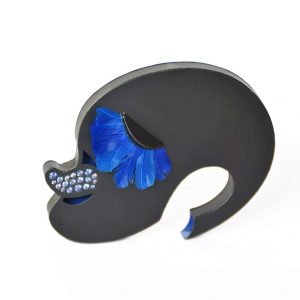
For me the museum is a place of inspiration and encounter. Essential for every creator of a work to see himself and his work in the context of time.
-

Nikolay Sardamov, Brasil
Intersections
This body of work consists of brooches.
I use the circle as a basic component and put together three-dimensional forms with six different circle sizes. These forms are built symmetrically, starting from a center and adding and arranging the components in different angles to form clusters and layers. The resulting shape is a rigid meshwork, where the cube can be recognized as the main organizing form.
Than I put the colors over the pieces and also balls at the exact places. Building the forms was like a game for exploring variations.
I used the same number of components to put together forms with different characteristics: pattern, density, color and size. The pieces are first built up in wax and then cast in one piece in bronze than powder- coated and bolls have been added at the end. -
Patricia Domingues, Portugal
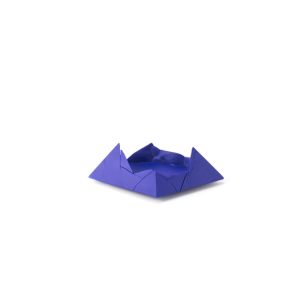
Imagined erosion
Humans and landscape have always been intrinsically connected to each other. The representation of a landscape is always a reconstructed image, a vehicle for different perceptions of immensity. In this way, a panoramic landscape picture can reveal the inside of a mountain, while a single fragment of a landscape can also represent the whole. Through processes of fragmentation the work mimics an imaginary relationship between the movements, patterns, and rhythms found in nature. On a small, controlled scale, blocks of artificial nature are broken and reunited with the idea of recreating an image of a landscape. The jewellery pieces form a link between the immense and the detail, and present a way to bring a grand-scale aspect of nature into the intimate realm of the human body. The resulting pieces are fractures, inscribed in a landscape which develops and liberates through the will of control and simultaneous release.
-
Pernille Mouritzen, Denmark
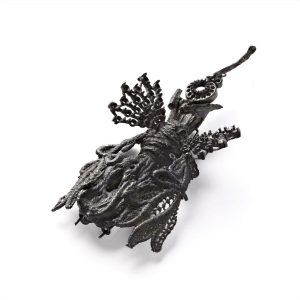
~
Faint echos of times gone by, fragments of ideas lost by others, accumulated as dust balls of thoughts and impressions with the fluff from pockets which return to me as shadowy beings.
These little creatures are to be found hiding in corners, under the custodians chairs and along the walls behind cabinets. If you move silently through the museum you may hear their raspy voices telling labyrinthine stories of connections through time. -
Peter Machata, Slovakia
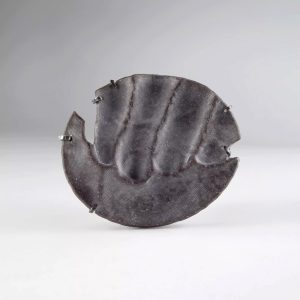
~
I am looking at my hands, they are quite similar and a little different. One is a little different, wearing a ring that is a symbol of something special. The second is more skilful. They can be gross but gentle at the same time, they can also create and destroy as well. Once they are strong and the other time they are weary, sometimes they cooperate and other times they resist.
My hands have been here with me for a long time, they are slowly changing and more and more resembling my father’s hands, just as my son’s hands will resemble mine; in something, a little bit.
They tell banal stories of my life, about what they did, what they touched, where they were and show where they will go. With each touch, they write this story into themselves and I turn this story into jewellery with their help. -
Pia David, Belgium
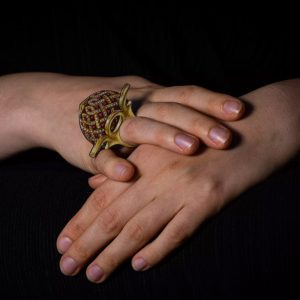
Flatte
In portraiture we regularly come across jewelry. Inside this painted environment they show off as symbols of status, identity and prosperity. The brooches from the ‘FlatteRing’ series play with this weightiness and symbolism while gently acknowledging the sheer decadence of it all.
-
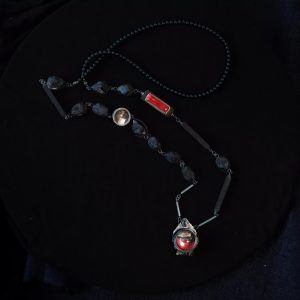
Ramunė Jundaitė-Misevičienė, Lithuania
~
My miniature museum, which holds all that is important and personal to me, is like a portable reliquary for which the person who carries it creates the greatest significance. It becomes like a continuation of the body that gets filled with contents. Can a modern person perceive the past as it was understood by the generation that is no longer with us? I recognize the past by form and structure, and it inspires me to be constantly searching through reshaping and rethinking what was before and who I am today.
-
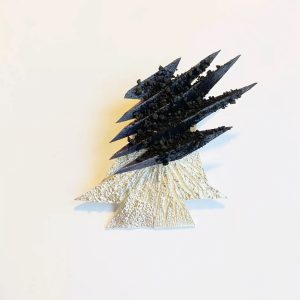
Rasa Ilginė, Lithuania
Anxiety
In this work, as in life, anxiety is fragile, but it hurts with its sharp edges and leaves deep wounds.
The beauty of the simple, minimalist form contrasts with the rough texture. Constant experimentation and the search for new forms and techniques enabled the creation of this piece – sculptural and inspired by avant-garde design. -
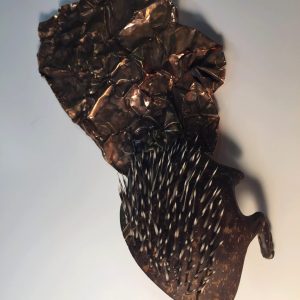
Rasa Jundulaitė, Lithuania
~
It didn’t take long after the quarantine was announced since animals started occupying abandoned streets and playing grounds. By mistake they took it for granted and without any short notice when people got back to normal, many birds and animals were hit by cars. The half of a hedgehog indicates that moment and became a part of a history.
-
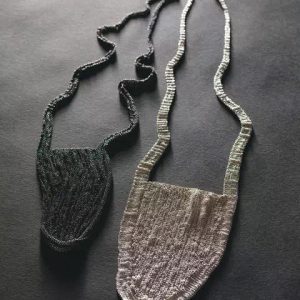
Ria Lins, Belgium
Imaginairy pouch for future dreams
A museum is an institution that cares for a collection of artifacts and other objects of artistic, cultural, historical, or scientific importance.
My pieces talk about history, changes and transience. I change the color of the silver to emphasize the many changes we are going true in our life and relations -
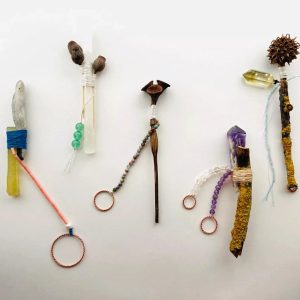
Sandra Malaškevičiūtė, Lithuania
~
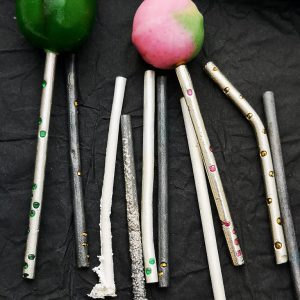
What is anger? What is goodness? It is the energy we don’t see but feel. Every person, animal, plant and object have its unique energy. So I present here five items – amulets, or objects with their distinct energy. You might choose to believe that they will heal you, or make you happier, or change your thoughts from bad to good. They are like healing sticks that might be from the past or that might appear in the future.
-
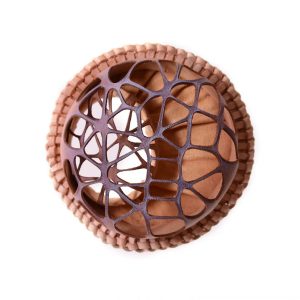
Sanna Svedestedt Carboo, Sweden
Museum
For the theme “Memory of a place” I have been thinking about the framework, the structure, the invisible skeleton we carry within. Stories, knowledge and inherited values covered in layers of experiences and memories, and deep down within us can be either a backbone or a confidment depending on the feelings towards it. Traces of generations passed.
-
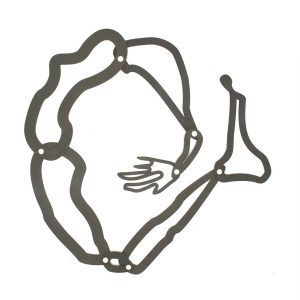
Sara Leme, Portugal
Dancing body
Celebrating passages is at the core of what makes us human, especially rituals of passage such as birth and death. In a digital, secularized age, how do we deal with and physically experience a dead body? While the living performs rituals of remembrance, in parallel time, the dead ‘choreograph’ their process of decay. Where does decay remain, and what is the Danse Macabre of today?
-
-
Sille Luiga, Estonia
~
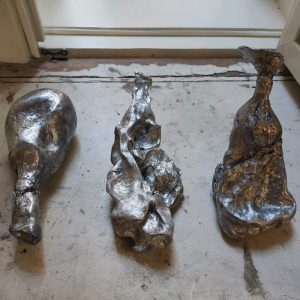
I remember everything very well, it’s beautiful. The time 20 years ago, when I went to a natural history museum and I vomited from looking at pictures of deformed fetuses. Summers when I worked as a French guide, dragging along 30 tired 1day tourists in a baroque palace. How I felt yesterday when I found out that the design museum is going to buy 2 pieces of my jewelry.
For all of this, I don’t trust museums, and no one should. Memories are poetry. -
Sonia Pibernat, Spain
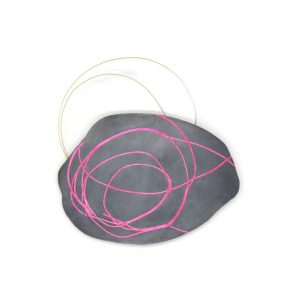
Linked line
Through the museums we can understand the past and also look towards the future. Preserving objects, museums have showed us the importance of jewelry. Through jewelry, human beings have been able to express their thoughts, emotions and feelings, also they could protect themselves. With my work Linked Line I want to pay tribute to the relationship between jewelry and humans and how this craft became an artistic expression.
-
Stefania Sioufa, Greece
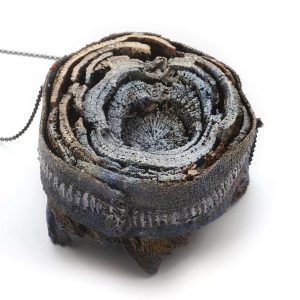
ABYSS
This contemporary jewelry collection was created having in mind the institutional role, the concepts and the values of a museum that avails its exhibits using the art of the past for engraving new paths for the future. Organic plant fragments fullfilling the cycle of their life, are regenerated through proper processing, preservation, sculpture and painting. The embossed textures are harmoniously embraced with the processing of metals giving a unique result. They are small works of art that combine inspiration and creativity, leaving my own imprint.
-
-
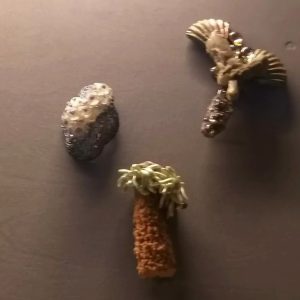
Tamara Gruener, Germany
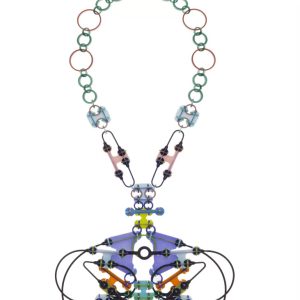
Rocky palm; Frozen; Swinging the silver sky
Brooch ”Rocky palm” 2019
Brooch ”Frozen” 2019
Brooch ”Swinging the Silver Sky” 2019 -
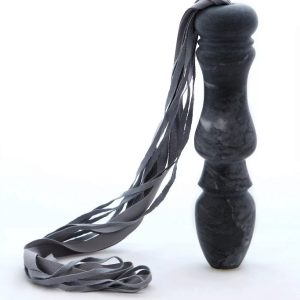
Tarja Tuupanen, Finland
About ornament II
To study ornament, decoration, with the tools of contemporary jewellery and my craft.
-
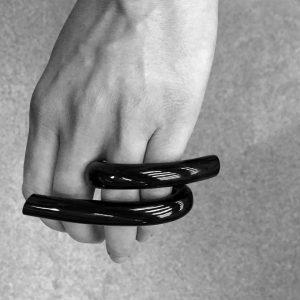
Triin Kukk, Estonia
~
Stone is exceptionally durable and therefore can be considered the most tangible form of time. Taking the characteristics of a found object, I transferred these by engraving them into the stone. Consequently, these objects hold thousands of years worth of information right up to today. Transient and unnoticeable they bear messages and with their apparently random form, they are fragments from the fringes.
-
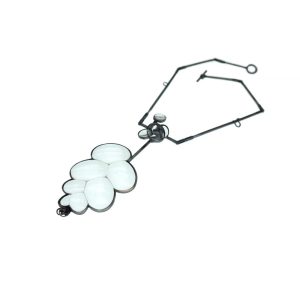
Valdis Brože, Latvia
Searchers (serija)
These works are a continuation of my “Searchers” series. The optical glass is like an obstacle to see what is really going on behind him. With our current feelings and knowledge, there will always be not enough. But looking from a different angle, there will already be something turned upside down.
-
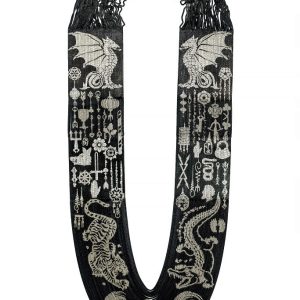
Veronika Fabian, Hungary
Insignia
The ‘Insignia’ necklace originates in the ‘Chains for an Average Woman’ collection, which draws connections between self-identity and female archetypes, exploring how individuality develops against a background of economic and cultural conditions. ‘Insignia’ is also used as a reference to tradition, history and heritage. The chains are soldered and oxidised with tattoo patterns and heraldic symbols of shields and banners. The heraldic guardians are tattooed supporters of the wearer’s symbolic coat of arms.
-
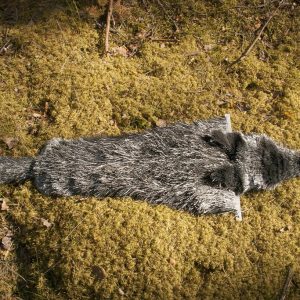
Vita Pukštaitė-Bružė, Lithuania
Wolf
The fur was discovered in the Kalnai Park under the roots of an oak tree toppled by a storm. I am convinced that it is an artefact dating back to the 14th century and even that the fur belonged to the very same wolf that inspired the founding of Vilnius. Until the examination is completed, I present it not as an artefact but as an almost-fact.
-
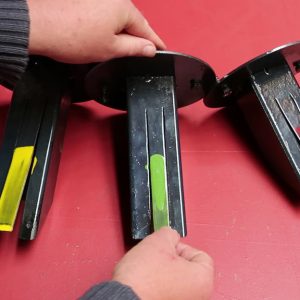
Volker Atrops, Germany
Tres faciunt collegium
Who owns the colours? Everyone.
The marimba, the kalimba, are by their very nature self-reflexive insturments; small, mobile, they were played by shepherds, by savannah children, and it was only later that these instruments found their way into musical groups and dance music. The metallophones I have made are, on the contrary, stationary, distributed in space to create the impression of multivoicing. It takes three people. Tres faciunt collegium.Thank you Lithuania, greetings from the Lower Rhine area
Volker Atrops
-
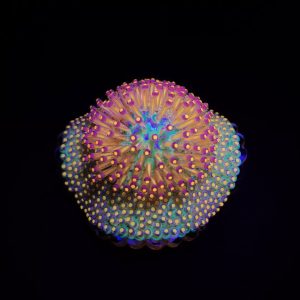
Wanshu Li, UK
Go with the glow
As we enter a space, space enters us. When contemporary art jewellery enters the museum, the museum becomes an intersection place of time, space and art, merging material properties of jewellery and the immaterial realm of human perception and imagination. By using the mixed media including tactile beads, metal, fluorescent nylon and UV reactive materials, I hope my work can provide the audience with a richer multisensory experience in the museum.
-
Wiebke Pandikow, Germany
~
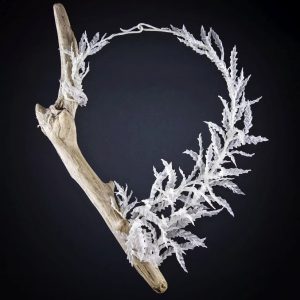
It took millennia for oil to form from dead organic material. It takes energy and time to make a plastic bag. And often, mere minutes to discard it. The life which became the oil, some of which became the bag, is still in there somewhere. I find it, bring it out, display it. To show you: there is more here than you thought there was.
-
Xavier Monclus, Spain
~
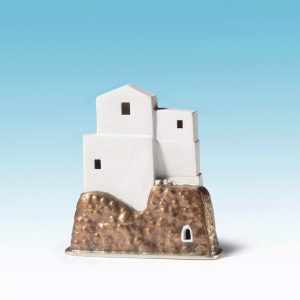
I consider architecture to be a constant and essential part of my work. I have never been able to avoid (resist) looking at houses in my daily walks, and feel a compelling attraction to them. When I look at them, I feel as if they return their gaze through their windows. They are like eyes that see…. I have lived on the island of Menorca for seven years, and those quintessential Mediterranean houses also look at me. And I look back at them. I am fascinated by their simple shapes, bold white textures and scale, the product of traditional wisdom. Menorca is for me an open-air museum. I wish to represent part of this small world in Vilnius, a Nordic place, where houses, I am sure, also look and speak ……
-
Yuxi Sun, Spain
~
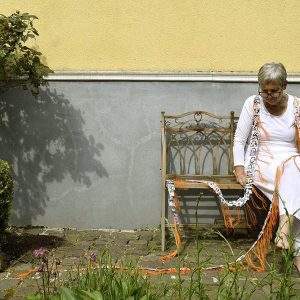
Museum, a place full of treasures, a place to store what we cherish for whole life. During the quarantine, I had the time to think about my previous days. This body piece is a personal story museum: all photos were well kept in the box for 10 years, witnessing my old time. Each piece was connected by orange threads. I was immersed in my memories when the needles going through each image.